

Shoulder Labral Tear
What is Anatomy of the Shoulder?
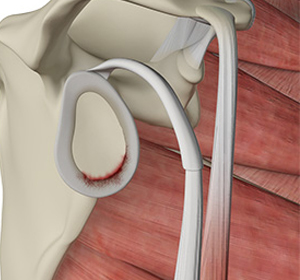
The shoulder joint is a ball and socket joint. A ball at the top of the upper arm bone (humerus) fits neatly into a socket, called the glenoid, which is part of the shoulder blade (scapula). The glenoid is surrounded by a ring of fibrous cartilage called the labrum for stabilization of the shoulder joint. The biceps tendon attaches inside the shoulder joint at the superior labrum of the shoulder joint. It is a long cord-like structure that attaches the biceps muscle to the shoulder and helps to stabilize the joint.
What is a Shoulder Labral Tear?
Traumatic injury to the shoulder or overuse of the shoulder (throwing, weightlifting) may cause the labrum to tear. In addition, aging may weaken the labrum leading to injury.
What are the Symptoms of Shoulder Labral Tear?
Shoulder labral tears may cause symptoms such as:
- Pain
- Catching or locking sensation
- Decreased range of motion
- Joint instability
Benjamin Meyer, D.O.
Board-Certified Orthopaedic SurgeonBenjamin Meyer, D.O. is a board-Certified orthopaedic surgeon with fellowship training in sports medicine, dedicated to helping patients return to the activities they enjoy. He specializes in the treatment of sports injuries and conditions affecting the shoulder, knee, hip, and other musculoskeletal structures, providing comprehensive care through evidence-based nonsurgical treatments, advanced arthroscopic procedures, robotic-assisted Mako® joint replacement, and personalized surgical solutions. Whether caring for competitive athletes or active individuals, Dr. Meyer is committed to restoring function, relieving pain, and helping every patient achieve their unique goals.
What are the Treatment Options for Shoulder Labral Tear?
Your doctor may initially suggest conservative approaches such as prescribing anti-inflammatory medications and advise rest to relieve symptoms until diagnostic scans are performed. Rehabilitation exercises may be recommended to strengthen the rotator cuff muscles. If the symptoms do not resolve with these conservative measures, your doctor may recommend arthroscopic surgery.
During arthroscopic surgery, your surgeon examines the labrum and the biceps tendon. If the damage is confined to the labrum without involving the tendon, then the torn flap of the labrum will be removed. In cases where the tendon is also involved or if there is a detachment of the tendon, absorbable wires or sutures will be used to repair and reattach the tendon.
What Does Postoperative Care for Shoulder Labrum Tears Involve?
After the surgery, you will be given a shoulder sling to wear for 3-4 weeks. You will be advised motion and flexibility exercises after the sling is removed. These exercises increase the range of motion and flexibility of the shoulder joint.
Schedule an Appointment
Our team is here to answer your questions and help you find the right treatment for your condition.