

Shoulder Dislocation
What is Anatomy of the Shoulder?
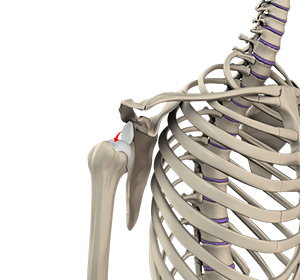
The shoulder joint is a ball and socket joint. A ball at the top of the upper arm bone (humerus) fits neatly into a socket, called the glenoid, which is part of the shoulder blade (scapula). The glenoid is surrounded by a ring of fibrous cartilage called the labrum for stabilization of the shoulder joint.
What is Shoulder Dislocation?
Sports that involve overhead movements and repeated use of the shoulder at your workplace may lead to sliding of the upper arm bone from the glenoid. The dislocation might be a partial dislocation (subluxation) or a complete dislocation causing pain and shoulder joint instability. The shoulder joint often dislocates in the forward direction (anterior instability), and sometimes in the backward or downward direction.
What are the Symptoms of Shoulder Dislocation?
The most common symptoms of shoulder dislocation include pain and shoulder joint instability. Other symptoms such as swelling, numbness and bruising may also occur. At times, it may cause tears in the ligaments or tendons of the shoulder and nerve damage.
Benjamin Meyer, D.O.
Board-Certified Orthopaedic SurgeonBenjamin Meyer, D.O. is a board-Certified orthopaedic surgeon with fellowship training in sports medicine, dedicated to helping patients return to the activities they enjoy. He specializes in the treatment of sports injuries and conditions affecting the shoulder, knee, hip, and other musculoskeletal structures, providing comprehensive care through evidence-based nonsurgical treatments, advanced arthroscopic procedures, robotic-assisted Mako® joint replacement, and personalized surgical solutions. Whether caring for competitive athletes or active individuals, Dr. Meyer is committed to restoring function, relieving pain, and helping every patient achieve their unique goals.
How is Shoulder Dislocation Diagnosed?
Your doctor will examine your shoulder and may order an X-ray to confirm the diagnosis.
How is Shoulder Dislocation Treated?
The condition is treated by a process called closed reduction, which involves placing the ball of the upper arm back into the socket. Following this, the shoulder will be immobilized using a sling for several weeks. Ice may be applied over the area 3-4 times a day. Rehabilitation exercises may be started to restore range of motion, once the pain and swelling decrease.
Schedule an Appointment
Our team is here to answer your questions and help you find the right treatment for your condition.