

Rotator Cuff Repair
Rotator Cuff Repair Surgeon in Colorado
Rotator cuff tears are commonly caused by acute injuries or degenerative changes that occur slowly with age or overuse. Benjamin Meyer, D.O. provides diagnosis and individualized nonoperative and operative treatments for the shoulder including rotator cuff repair in Colorado. Benjamin Meyer, D.O. also provides the highest level of care during and after surgery. Contact Benjamin Meyer, D.O.'s office for an appointment today!
What is the Rotator Cuff?
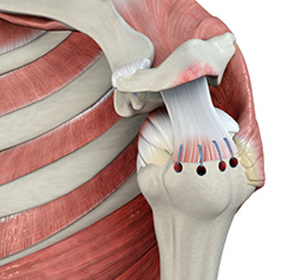
The rotator cuff is a group of 4 muscles in the shoulder joint including the supraspinatus, infraspinatus, teres minor, and subscapularis. These muscles originate in the scapula and attach to the head of the humerus through tendons. The rotator cuff forms a sleeve around the humeral head and glenoid cavity, providing stability to the shoulder joint while enabling a wide range of movements.
Injury to the rotator cuff may occur due to pressure on the rotator cuff from part of the shoulder blade (scapula). It may occur due to repeated use of the arm for overhead activities or while playing sports. A forceful injury such as trauma can cause one or more of these tendons to tear, a condition called rotator cuff tear.
What is Rotator Cuff Repair?
Rotator cuff repair is a surgery to repair an injured or torn rotator cuff. It is usually performed arthroscopically on an outpatient basis. An arthroscope, a small, fiber-optic instrument consisting of a lens, light source, and video camera. The camera projects images of the inside of the joint onto a large monitor, allowing your doctor to look for any damage, assess the type of injury and repair it. Large rotator cuff tears may require open surgery.
When is Rotator Cuff Repair Necessary?
Your doctor may suggest surgery to treat rotator cuff tears if you:
- do not respond to non-surgical treatment options
- have severe shoulder pain and experience loss of strength
- you want to return to sports soon
What Does Preparation for Rotator Cuff Repair Involve?
Your doctor will assess your symptoms and take your medical history. Imaging tests such as X-ray, MRI or CT-scan may be ordered. Talk to your doctor about the medicines you are taking prior to the procedure and if you are allergic to any medicines or anesthesia. Arrange for someone to drive you home.
Benjamin Meyer, D.O.
Board-Certified Orthopaedic SurgeonBenjamin Meyer, D.O. is a board-Certified orthopaedic surgeon with fellowship training in sports medicine, dedicated to helping patients return to the activities they enjoy. He specializes in the treatment of sports injuries and conditions affecting the shoulder, knee, hip, and other musculoskeletal structures, providing comprehensive care through evidence-based nonsurgical treatments, advanced arthroscopic procedures, robotic-assisted Mako® joint replacement, and personalized surgical solutions. Whether caring for competitive athletes or active individuals, Dr. Meyer is committed to restoring function, relieving pain, and helping every patient achieve their unique goals.
What is the Procedure for Rotator Cuff Repair?
The procedure is performed under general or regional and involves the following steps:
- One or more incisions are made at the skin near the shoulder joint.
- An arthroscope is inserted through the incision.
- Miniature surgical instruments are inserted to remove the damaged part of the tendon and injured surrounding tissue.
- The damaged ends of the tendon are sewn together. Care is taken to prevent damage to nearby nerves or blood vessels.
- A suture anchor may be used to reattach a completely torn tendon to the bone.
- The incision is closed and covered with a bandage.
What Does Postoperative Care for Rotator Cuff Repair Involve?
Prescription pain medicines or NSAIDs (non-steroidal anti-inflammatory drugs) are used to manage pain. Your shoulder will be placed in a brace or cast and you will be encouraged to keep weight off. You will be allowed to perform specific physical therapy exercises as you heal. You may return to normal activities after 6 months.
What are the Risks and Complications of Rotator Cuff Repair?
As with any surgery, there are associated risks and complications may occur. Those related to rotator cuff repair may include:
- Anesthetic complications
- Infection
- Nerve damage
- Stiffness
- Tendon re-tear
If you would like additional information on the treatment of shoulder conditions or to learn more about rotator cuff repair, please contact Benjamin Meyer, D.O., serving the communities of Colorado.
Schedule an Appointment
Our team is here to answer your questions and help you find the right treatment for your condition.